11th Workshop on
Automated Knowledge Base Construction
Co-located with EMNLP 2026 in Budapest, Hungary — October 28, 2026 Room F8.
While Large Language Models (LLMs) have revolutionized NLP, they remain prone to hallucinations, reasoning “mode-collapse” in open-ended generation, and a lack of factual provenance. The Automated Knowledge Base Construction (AKBC) workshop addresses a key missing piece of the generative era: structured knowledge. Knowledge Bases (KBs) serve as ground truth for fact verification, the semantic backbone for constrained decoding in generation, and as a resource behind Retrieval-Augmented Generation (RAG).
The workshop contributes to the growing momentum around integrating structured knowledge into generative models, both at training time and at inference time.
It follows a successful series of previous editions: as an independent conference in 2022, 2021, 2020, and 2019; as a workshop in 2017 at NIPS, in 2016 at NAACL, in 2014 at NIPS, in 2013 at CIKM, in 2012 at NAACL; and in 2010 as a stand-alone event in Grenoble, France.
Sponsors
We are grateful to our sponsors:


News
- We are grateful to our sponsors Bloomberg and SLB!
- September 8th, 2026: Out of 58 submissions, 27 papers were accepted — see the list of accepted papers
- September 8th, 2026: Parisa Kordjamshidi (Michigan State University) is confirmed as a keynote speaker
- September 1st, 2026: Shared task results are out — see the winners on the shared task page and the full final leaderboard
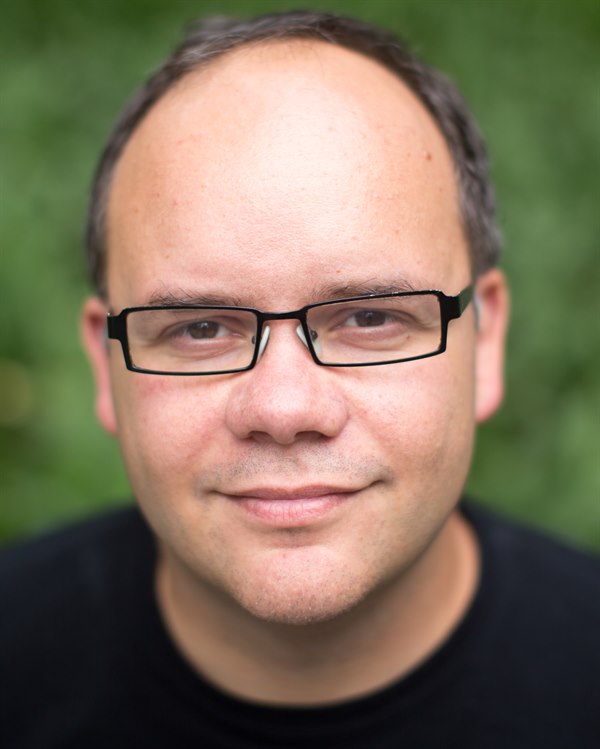
- August 12th, 2026: Denny Vrandečić (Wikimedia) is confirmed as a keynote speaker
- July 30th, 2026: Amir Globerson (Tel Aviv University & Google) is confirmed as a keynote speaker
- July 23rd, 2026: Dan Roth (University of Pennsylvania & Oracle) is confirmed as a keynote speaker
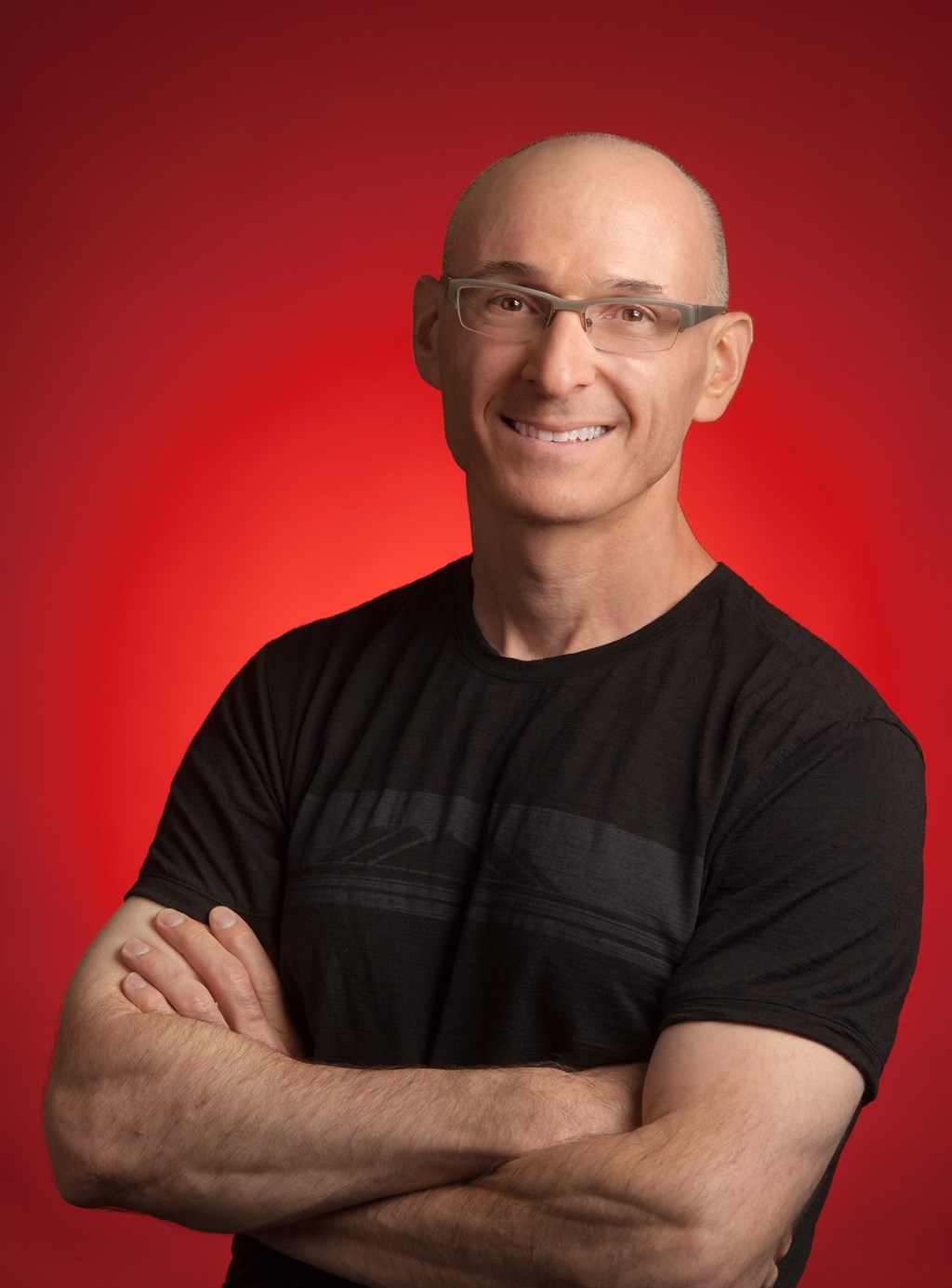
- May 28th, 2026: Alon Halevy (Google) is confirmed as a keynote speaker
- May 27th, 2026: The workshop day is fixed to October 28, 2026
- May 21st, 2026: We are excited to announce Heng Ji (UIUC) as a keynote speaker
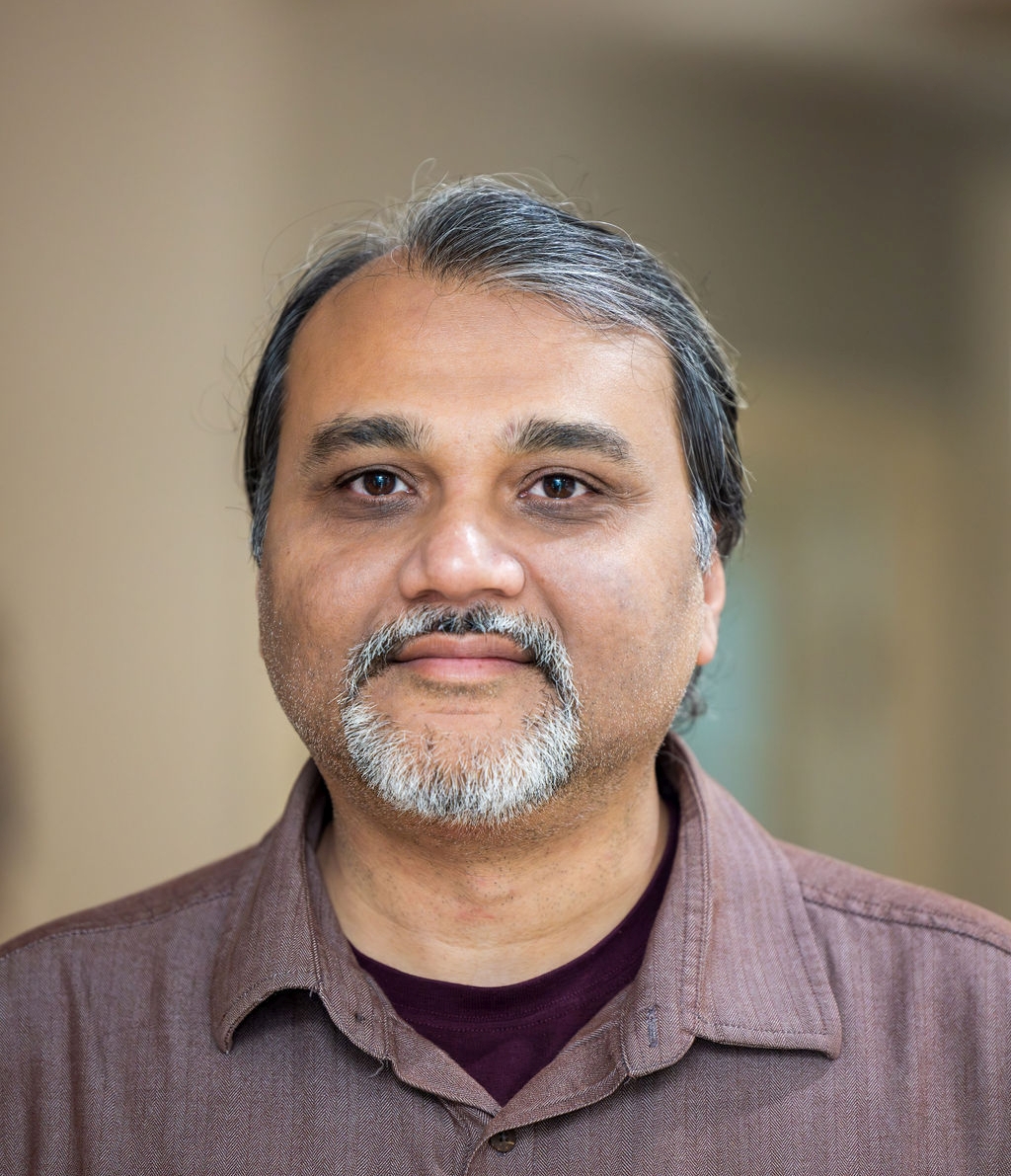
- May 21st, 2026: We are excited to announce Mausam (IIT Delhi) as a keynote speaker
- April 27th, 2026: We receive news that the workshop will be held on October 28, 2026
- April 13th, 2026: The Web page of AKBC goes live
Accepted Papers
Accepted papers are presented as posters, with a selection invited for lightning talks. Remote viewing is possible; remote authors upload their poster to the workshop website instead of presenting physically.
Research Papers
- A Rhetorical Citation Event Graph Model for Characterizing Scientific Findings: Resource Construction and Application to Plant Health
- A Temporal Knowledge Graph for Music Festival Lineup Forecasting
- Auditing a KB Elicitation of Frontier LLM Knowledge: A Multi-dimensional Analysis of GPTKB v1.5
- Can We Do Interpretable NLI with Graphs Based on Atomic Propositions?
- Distill-RE: Few-Shot Relation Extraction via Teacher LLM Reasoning Distillation
- Edge Knowledge Bases for Sustainable and Explainable AI
- Epistemic Twins: Enabling a Symbolic Science of Language Model Knowledge
- EventSocraticKG: Event-Centric Knowledge Graph Construction for Narrative Retrieval-Augmented Generation
- Evidence-Carrying Claims: Fail-Closed Verification Gates for Language-Model-Assisted Research as Knowledge Base Construction
- Evidence-Guided Schema Normalization for Temporal Tabular Reasoning
- Explaining Textual Entailment with Lexical Entailments: Using LLMs to Supply Lexical Relations for Formal Proofs
- FALCON: A Model and Dataset Agnostic Framework for Synthetic Data Generation for NL2SQL Pairs
- Fine-Grained Table Retrieval Through the Lens of Complex Queries
- From Imitation to Reasoning: Sample-Efficient LLM Agents for Knowledge Graph Completion
- GRACE: Graph-Grounded Reflective Agent Copilot Engine for Expert-in-the-Loop Knowledge Expansion
- GRACE-Mem: Graph Retrieval with Agentic Curation of Evidence for Long-Term Conversational Memory
- HTTP for Meaning: Towards Linguistically Complete Knowledge Representations with Knowledge State Protocol
- LMKG: A Flexible Method for Ontology-Aware Knowledge Graph Extraction from Text
- MUSART: A Scalable Multi-Domain Benchmark for Measuring Factual Recall in Open-Weight Language Models
- Operationalization Is Part of the Claim: Operationalization-Aware Knowledge in the Era of Generated Answers
- Revisiting RAG Retrievers: An Information Theoretic Benchmark
- Scaling E-Commerce Attribute Extraction with Parallel Decoding
- Schema-Guided Extraction of Interaction Knowledge Bases from Narrative Text: A Folktale Case Study
- The Canonical Order Problem: When Large Language Models Are Unreliable Knowledge Bases for Multi-Valued Relations
- When Relevance Is Not Evidence: A Controlled Diagnostic of Claim-Conditioned Support Ranking
- When String Matching Stands In for a Knowledge Base: A Role-Aware Audit of WikiBigEdit
- Zero-Shot Relation Classification with Large Language Models: Binary Prompting and Relevance Elicitation
Shared Task Papers
- 🥇 Winner — Coverage Is Not Knowledge: Why Closed-Book Knowledge Base Construction Looks Selection Bound
- 🥈 2nd place — MAVE: Multi-Angle Voting for Emission in Closed-Book Knowledge Base Construction
- 🥉 3rd place — The Instruction Tax on Factual Recall: Base Models Can Beat Their Instruction-Tuned Counterparts
- Closed-Book Knowledge Base Construction with Calibrated Abstention and Numeric Self-Consistency
- A Forced Answer Channel for Closed-Book Knowledge Base Construction at LM-KBC 2026
- REAP: Relation-Aware Elicitation and Parsing for Closed-Book Knowledge Base Construction from LLMs
- SetProbe: Description-First Relation-Wise Self-Consistency for Closed-Book Knowledge Base Construction
- Knowledge Base Construction from Language Models: Mechanisms and Calibrations for Multi-Object Relational Extraction under Parameter Budgets
- Pre-training Aware Directed Reasoning for Closed-Book Knowledge Base Construction
- Exemplars Primarily Shift Retrieval, Verification Instructions Can Shift Rejection: An Anatomy of Inference-Time Interventions for Closed-Book Knowledge Base Construction
- COVER-KBC: Evidence-Centric Adaptive Inference for Closed-Book Knowledge Base Construction
- MuseList: Confidence-Gated Multi-Surface Recall for Closed-Book Knowledge Base Construction
- One Workflow Does Not Fit All Relations: A System Description for the AKBC 2026 LM-KBC Shared Task
- CoRe: Construct-versus-Recall Routing for Knowledge Base Construction Under a Parameter Budget
- Ensembling Elicitation Strategies for Knowledge Base Construction
- DataMind at AKBC Shared Task 2026: Relation-Specific Multiple Prompting for Closed-Book Knowledge Base Completion
- Relation-Specific Elicitation of a Base Model under a 32B Closed-Book Budget for LM-KBC 2026
Shared Task
Large language models contain a substantial amount of factual knowledge. Turning that knowledge into reliable knowledge base entries, however, is much harder than answering a single factual question.
Given a subject s and a relation r, predict the complete set of correct object strings {o₁, o₂, …, oₖ}. Unlike standard factual QA, a subject may have zero, one, or many correct objects. The goal is to construct a complete and precise KB entry.
Further details are on the shared task page.
Invited Speakers

Provisional Schedule
The program is provisional and subject to change.
| Time | Item |
|---|---|
| 08:30–08:45 | Opening |
| 08:45–09:15 | Invited talk 1: Denny Vrandecic |
| 09:15–09:45 | Invited talk 2: Mausam |
| 09:45–10:15 | Invited talk 3: Heng Ji: Constructing a 16-Million-Edge Knowledge Network for Agentic Scientific Discovery |
| 10:15–10:30 | Featured paper 1: Explaining Textual Entailment with Lexical Entailments: Using LLMs to Supply Lexical Relations for Formal Proofs, de Jong et al. |
| 10:30–11:00 | Coffee break |
| 11:00–11:30 | Invited talk 4: Amir Globerson |
| 11:30–12:00 | Invited talk 5: Parisa Kordjamshidi |
| 12:00–12:15 | Featured paper 2: Zero-Shot Relation Classification with Large Language Models: Binary Prompting and Relevance Elicitation. Alemany et al. |
| 12:15–12:30 | Featured paper 3: GRACE-Mem: Graph Retrieval with Agentic Curation of Evidence for Long-Term Conversational Memory, Wang et al. |
| 12:30–13:30 | Lunch break |
| 13:45–14:30 | Shared task session |
| 14:30–16:00 | Poster session |
| 15:30–16:00 | Coffee break (overlapping with posters) |
| 16:00-16:30 | Invited talk 6: Alon Halevy: Designing Knowledge Agents |
| 16:30–17:00 | Invited talk 7: Dan Roth |
| 17:00–17:15 | Community discussion |
| 17:15–17:30 | Closing |
| 18:00-open end | AKBC reception at Sky bar of Expo Tower Hotel (conference hotel) (TBC) |
Organization
Organizing Committee
- Jan-Christoph Kalo, University of Amsterdam, Netherlands
- Ndapa Nakashole, University of California, San Diego, USA
- Simon Razniewski, ScaDS.AI Dresden/Leipzig & TU Dresden, Germany
- Fabian M. Suchanek, Télécom Paris, Institut Polytechnique de Paris, France
- Andreas Vlachos, University of Cambridge, United Kingdom
- Andrew McCallum, University of Massachusetts Amherst, USA
Contact us at akbc2026@gmail.com for workshop inquiries, or at akbc2026-shared-task@googlegroups.com for shared task inquiries.
Program Committee
- Sameer Singh (University of California, Irvine)
- Gerhard Weikum (Max Planck Institute for Informatics)
- Sunita Sarawagi (IIT Bombay)
- Annalisa Gentile (IBM)
- Nitisha Jain (Microsoft Research Cambridge)
- Sören Auer (University of Hannover)
- Danqi Chen (Princeton University)
- Doug Downey (Allen Institute for AI / Northwestern University)
- Zifeng Ding (Cambridge University)
- Moy Yuan (Amazon)
- Paolo Papotti (EURECOM)
- Gerard de Melo (Hasso Plattner Institute)
- Steffen Staab (University of Stuttgart)
- Rainer Gemulla (University of Mannheim)
- Luis Galárraga (INRIA Rennes)
- Lihu Chen (Imperial College London)
- Advitya Gemawat (Microsoft Research)
- Estevam Hruschka (Megagon Labs)
- Jingbo Shang (University of California, San Diego)
- Roi Cohen (HPI)
- Hiba Arnaout (Darmstadt University)
- Shrestha Ghosh (Tübingen University)
- Paul Groth (University of Amsterdam)
- Filip Ilievski (Vrije Universiteit Amsterdam)
- Russa Biswas (Aalborg University)
- Derry Wijaya (Monash University Indonesia)
- Pierre-Henri Paris (Paris-Saclay University)
- Daniel Daza (Vrije Universiteit Amsterdam)
- Jieying Chen (Vrije Universiteit Amsterdam)
- Selene Báez Santamaría (University of Zurich)
- Mohamed Gad-Elrab (Bosch Research)
- Benno Kruit (Amsterdam UMC)
- Andrea Schimmenti (Università di Bologna)
- Roman Klinger (University of Bamberg)
- Jay Pujara (USC Information Sciences Institute)
- Zachary Ives (University of Pennsylvania)
- Samy Haffoudhi (Institut Polytechnique de Paris)
- François Crespin (Institut Polytechnique de Paris)
- Christian Bizer (University of Mannheim)
- Aparna Varde (University of Southern Denmark)
- Wassila Ouerdane (CentraleSupélec, Paris-Saclay University)
- Raphaël Troncy (EURECOM)
- Jonathan Berant (Tel-Aviv University/Google DeepMind)
- David Campos (University of Amsterdam)
- Robin Jia (University of Southern California)
- Sai Kolapudi (Amazon Web Services)